
Trust & Translation
BIRDSONG as Healer

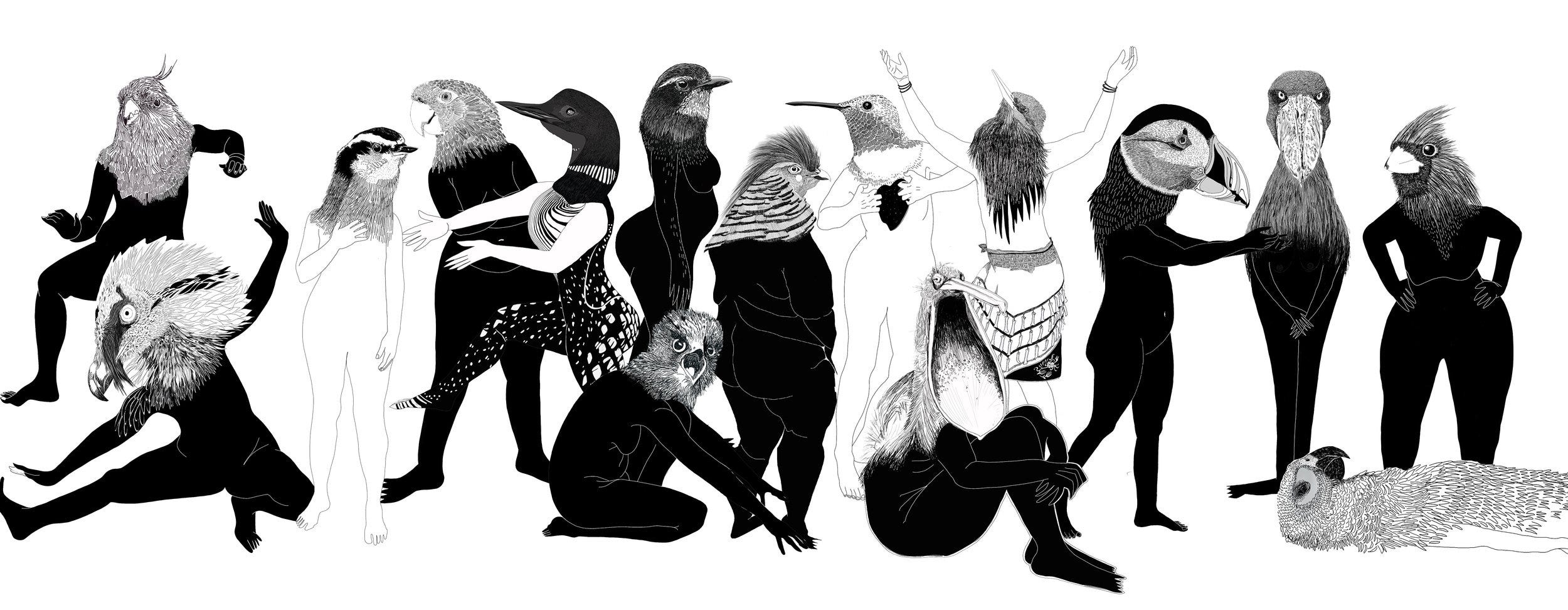
“Does one work on art, or does art work on us? After seven years of collaging, drawing, erasing, writing, and researching, I feel that when I dedicate myself to the creative process, it responds in turn.”
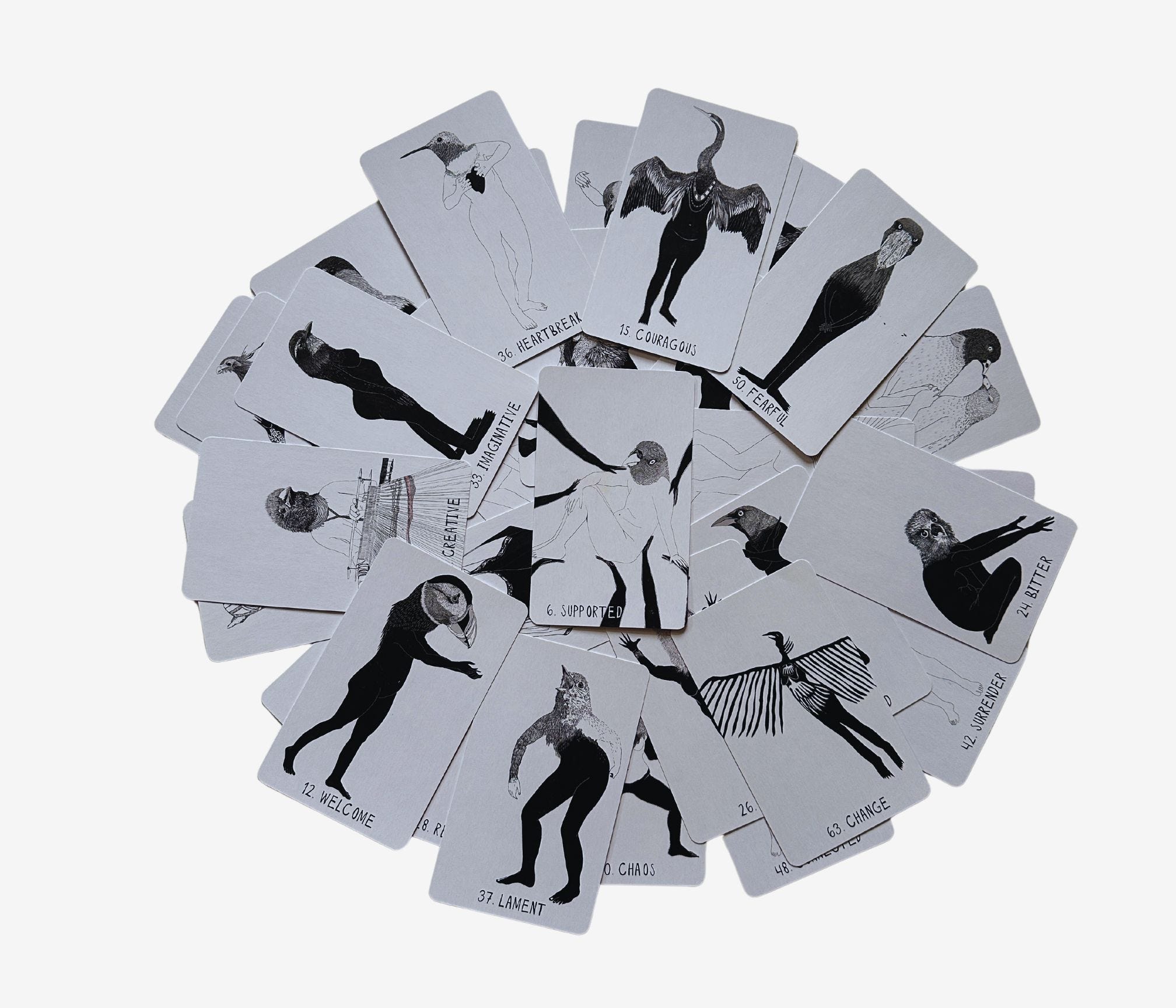
My friend, Meryl from Our Mindful Nature, invited me to her podcast to discuss my forthcoming divination deck, Birdsong: A Somatic Oracle. Her first question sent me into a labyrinth of memory, dream and imaginal realms; she wanted to know its origin story. Calculating Birdsong's moment of conception was complex and fascinating. I searched my journals, scrolled through pictures, and chronologically gathered dreams. Listen to the whole conversation here, or watch via YouTube.
Let's start with a dream.
Trust
Do you trust your dreams? Do you trust the guidance of synchronicities? Do you trust your visions?
In 2010, I dreamed of a little mouse wearing blue overalls. The dream was simple; the mouse said in the loudest, most resounding, and penetrating voice I have ever heard (dreaming or waking), "There's something real inside you." The following morning, I illustrated the dream on my dry-erase wall, where it stayed until we moved from that house. Since then, I have worked with this dream in various ways, somatically, creatively, and through active imagination.
Fast-forward to 2018. I am in a dream class, and we are doing collective dream work. I decide to track my dreams alongside my menstrual cycle and the moon's phases. During this time, my dreams are filled with sensations of community, water, trees, spirals, forests, and education. Birdsong originates during this time and through a series of dreams.
July 16, 2018
There is a bathhouse of people who can’t bathes themselves—all women. Some are in wheelchairs some just can’t move certain ways. I help them take a bath, shower, wash hair, massage shoulders and scalp. They are not expecting such care, they just want to soap and leave. I give them care wash hair make sure water is warm enough. It’s like a water park for women —I take honor and pride in my work.
When I had this dream, I experienced myself as all these women, especially those who couldn’t care for themselves. I saw them as my own wounding, something I wanted to wash away quickly. This dream gave me the key that wounding needed space and care, and I had that capacity. The next day, I dreamt I was:
looking for a voice. It’s not one, but many; the voice is a chain of hands linked at the heart. The message comes through them “the wound is a doorway; a portal wounding happens to open.”
About a week later, while working with the mouse dream in an active imagination dream state, I saw a mouse lady who showed up with no overalls.
She doesn’t need overalls in this circle.
She feels protected; overalls are only necessary outside.
She shows me how to make a doll.
Sew or hot glue a head of a stuffed animal to the top of a body.
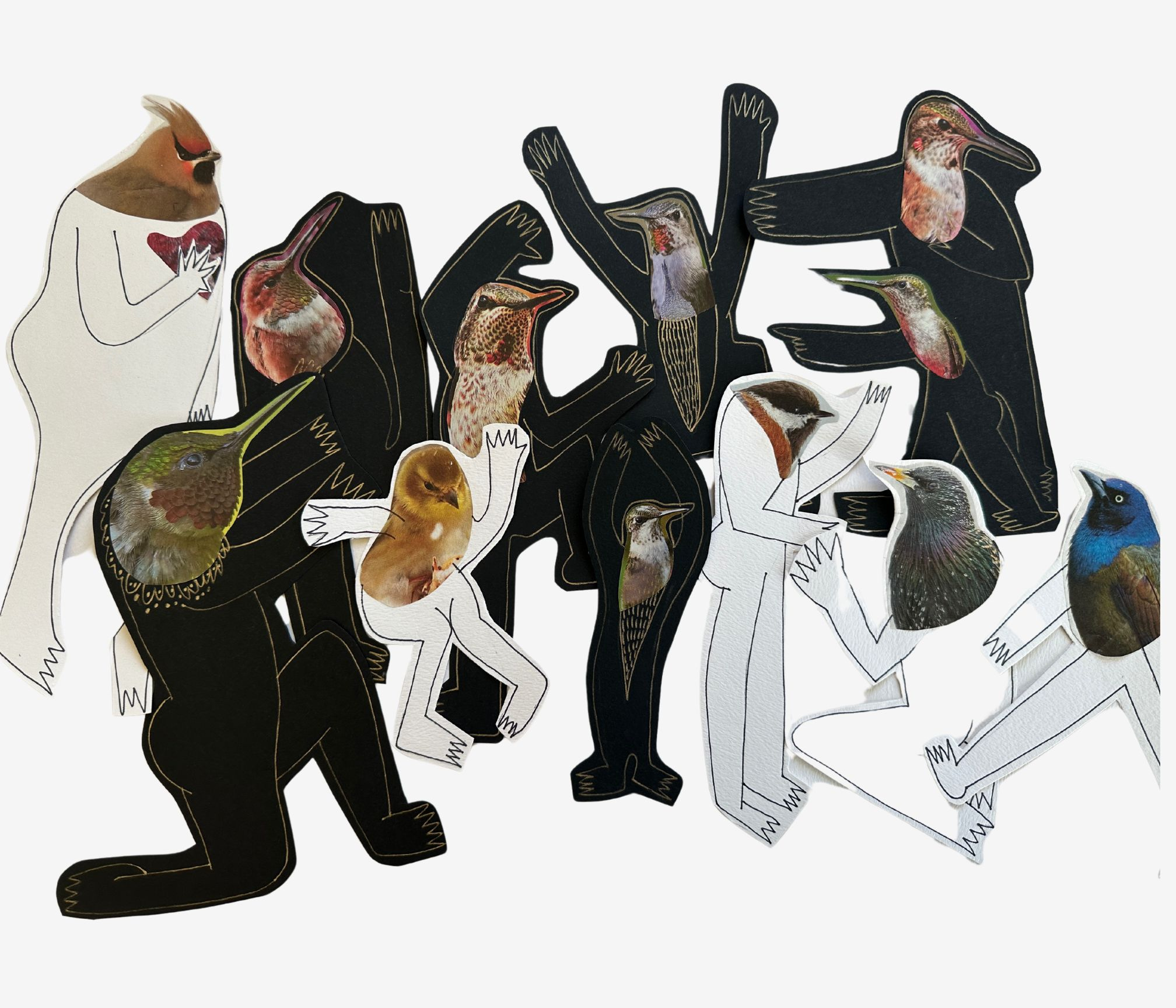
While I can’t pinpoint the day, it was after one of these dreams that I felt overtaken by creativity and made more than a hundred collages, mostly animal heads on humanoid bodies. This is how the images in the oracle deck were shaped. What I didn’t know then was how drawing these birds would teach me, show me, and share the images I needed to begin healing my wound of homeland-lessness.
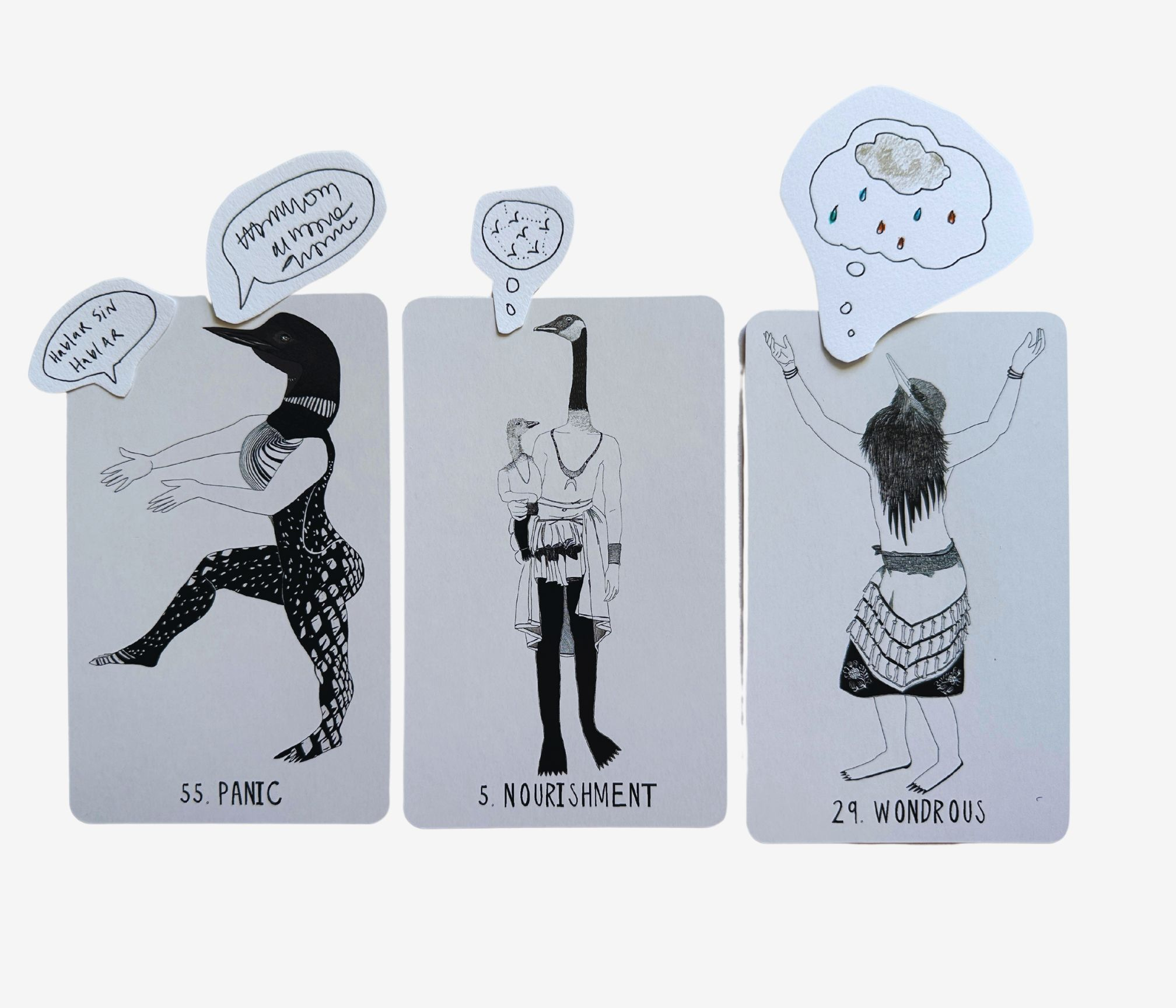
The Loon taught me that there are many ways to speak.
The Canada Goose shared with me that leadership needs changes.
The mythology of King Fisher taught me about the wonders of grief.
Perhaps the most important lesson the birds taught me is that migration is a natural phenomenon for many species, while for others who don’t typically migrate, sometimes they must. For example, if the nuthatch, a typically non-migratory bird, doesn’t have enough food supply, or the food sources are poor, they are forced to leave their location to ensure their survival; this phenomenon is called an irruption. For all of nature, migration is archetypal.
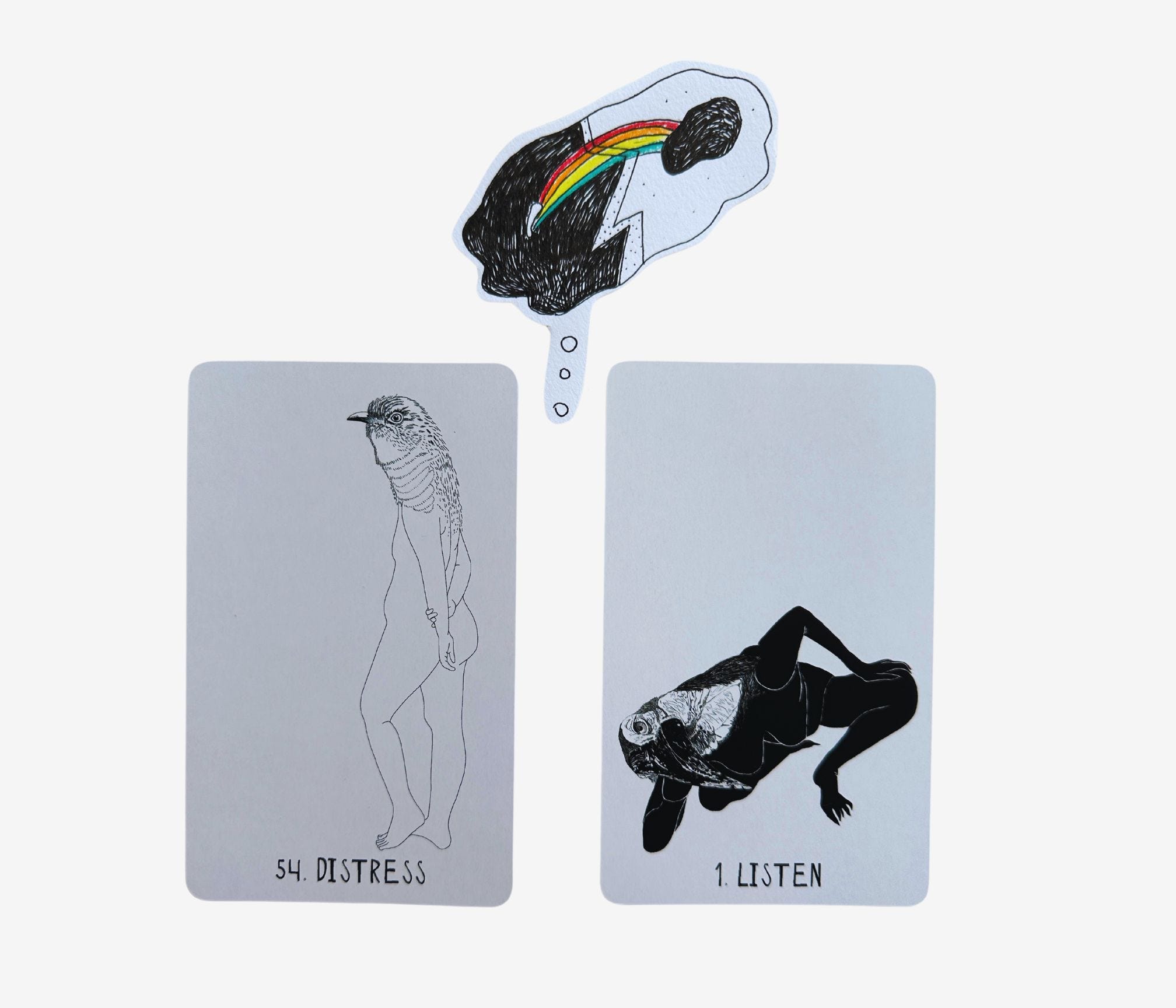
The Archetype of Immigration
The archetype of immigration as it has appeared in my family is tied to proving oneself; the archetypal image is often expressed in the improvement of something discarded or the mending of a situation—we were taught to resolver to“fix” the struggle, pain, and Otherness. For the most part, this fixing included external problems or issues—work, housing, childcare, finances, and language. Internal struggles were diminished, overlooked, or suppressed.
Like many immigrant families, mine labored and creatively used their hands to battle the deep psychological wounds that accompany leaving one’s homeland and “making it” in a foreign place. My paternal and maternal grandparents labored in factories when they first arrived in the United States while also maintaining a side hustle—work on the side that was infrequent, spontaneous, and often illegal. Abuelita Rosa, my great-grandmother, left her husband to accompany my grandmother and my mother. She only saw her beloved one other time; I believe her love and devotion to tending the garden, feeding the birds, and caring for her family helped assimilate a grief we rarely voiced.
Translation
While I didn’t have to survive in foreign lands, the part of me that had to learn to assimilate the feelings of not belonging fully or always being different, was expressed through drawing. I usually draw to both unload what I am feeling and download something my body has to share, which I can’t seem to either articulate or comprehend. In other words, the image I draw generates information and aids my listening. The art created by listening to dreams, visions, and synchronicities is knowing—it is knowledge. Drawing to listen and understand parallels the relationship and complexity of the archetypal image that evokes a sense of the unknowable archetype.
Archetypes are recognized as universal, organizing energies or patterns inherited in the deepest layer of the unconscious (Jung, 1921/1971). One engages with an archetype via an archetypal image, which can personify deep psychological processes (Jung, 1954/1969a). An archetypal image is the movement of psychic material into a tangible form. It is nearly impossible to relate to the archetype without an image, whether in words, movement, drawing, song, or marks. The archetype compels one to make meaning, translate, and create the knowledge necessary to relate to it. Jung explained this process, one that as an artist breathes life into the inner images and makes them part of the world:
Often it is necessary to clarify a vague content by giving it visible form. This can be done by drawing, painting, or modeling. Often the hands know how to solve a riddle with which the intellect has wrestled in vain. By shaping it, one goes on dreaming the dream in greater detail in the waking state, and the initially incomprehensible, isolated event is integrated into the sphere of the total personality. (Jung, 1958/1969, pp. 86–87)
In other words, translating is an example of art as a way of knowing in and of itself. It has the capacity to offer continuous meaning when an image reflects, responds to, or activates an archetype.
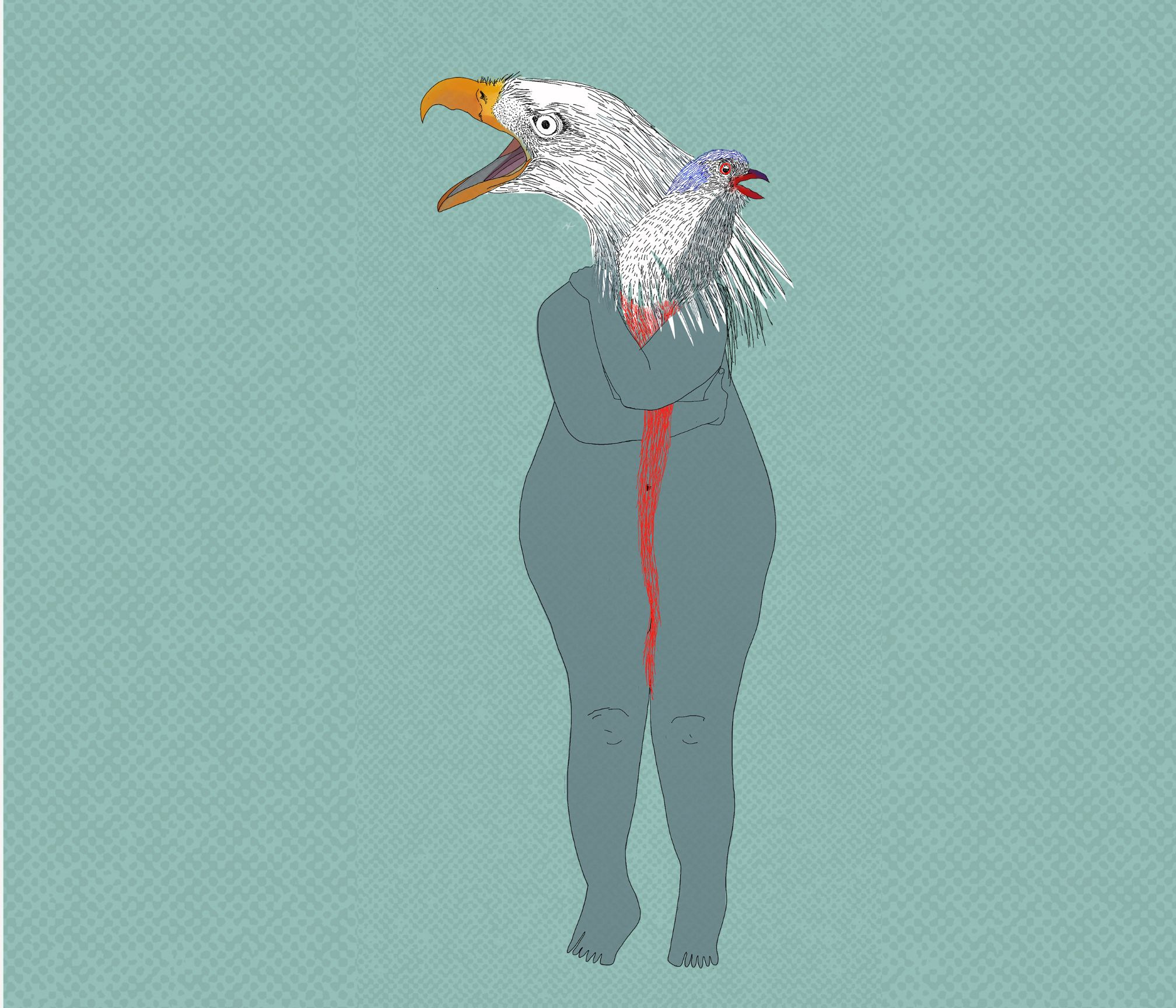
One drawing in the Birdsong Oracle that keeps sharing with me depicts two birds: one of the smallest known birds, the bee hummingbird or Zunzuncito, native to Cuba and the Caribbean, and the monumental iconic bird of prey, the bald eagle. When I drew them, I felt at odds; they clearly expressed my feelings of homeland-lessness and not belonging and voiced my trying to reconcile those feelings: the immensity of my family's unspoken prayer to honor their migratory sacrifice and the smallness of my so-called roots.
As I drew the crossed arms, I wanted to hug and accept myself, the part of me that feels disconnected and rarely recognized as Cubana. This image shared and revealed so much of homeland and born-land: resentment, acceptance, impure, unwelcomed, perilous, dangerous, and hyphenated.
I called the deck Birdsong in honor of each image's ability to change shape and alter its form, like the birds' varying songs and calls. While you might identify the curved-billed thrasher's early morning call, it sounds different each morning. Similarly, we might be able to recognize a general feeling, yet each time it has a nuanced landscape. In other words, we never feel the same wonder, awe, anger, or distress. Birdsong becomes a portal, threshold, and doorway to being in relationship to the spectrum of our feelings and emotions, personally and collectively.
The birds call out as a salve to the wounds and remind me:
Anhinga says, “To be courageous takes vulnerability.”
Albatross says, “The sky is also a home place.”
Puffin says, “The ocean is also a home place.”
Hen says, “There is no way to locate my origins; I am from all places.”
Creative Contemplation:
For this practice, you will need a journal or sheet of paper.
Colors (crayons, markers, colored pencils)
Take a moment to lean back, rest your head, and get comfortable.
Sense your breath and its temperature. (1 minute)
Allow awareness to travel from the tips of your toes through your body to the top of your head. (2 minutes)
Then let the breath settle. (1 minute)
Notice your current feeling without trying to change or shift it. (1 minute)
Welcome your current feeling in your unique way. Breathe with this current feeling. (2 minutes)
Then imagine your hands translating this feeling on the page; write, draw, doodle, or make expressive marks on your page. As a bonus, use your non-dominant hand, or both hands, to translate. (3 minutes)
Use these questions as guides to translate your current emotion:
What is the color of this emotion?
What is its shape or texture?
Does this emotion have a name?
Is it sharing a message with you today?
Once you feel complete, give gratitude for this feeling/ emotion.
Transition out of this creative contemplation by deepening your breath, closing your journal, or in your way.
May this full moon and lunar eclipse in libra share with you what is needed to navigate the wounds, personal and collective.
Dr. Chanti
Dr. Chanti's Substack is a reader-supported publication. You can expect both theory and practice—nerdy-scholarly articles, creative invitations, and liminal practices that support. To receive new posts and support my work, consider becoming a free or paid subscriber.